A calming VR space for people stuck on a mental healthcare waitlist
Wait times for mental healthcare support regularly run into months. Mediationist is a guided VR meditation I designed and built to give people something to lean on in the meantime — not a replacement for therapy, but a way to get through a harder day.
Mental healthcare has a waiting-room problem
According to the WHO, roughly one in four people will experience a mental health condition at some point in their life, and an estimated 350 million people worldwide live with depression. In the Netherlands, close to 90,000 people were on a waitlist for mental healthcare support as of October 2021 — and for several diagnosis categories, average wait times ran well past the government's own treatment-time norm.
People on that waitlist still have to get through their days. That's the gap I designed for.
People worldwide will experience a mental health condition in their lifetime (WHO).
People living with depression worldwide.
People on a mental healthcare waitlist in the Netherlands, October 2021 (Hesdahl, 2021).
Understanding stress, and what already exists
I looked into the physiology of stress and anxiety, established clinical approaches like VR Exposure Therapy (VRET), and how consumer meditation apps handle guidance, pacing, and personalization.
Prolonged stress keeps the body producing cortisol and adrenaline well past the point they're useful, which is linked to fatigue, poor sleep, and worsened anxiety or depression over time. Breathing exercises are one of the more directly effective ways to interrupt that cycle — they lower heart rate and help rebalance oxygen and CO2 levels in a matter of minutes.
Virtual Reality Exposure Therapy is an established clinical method that gradually exposes patients to feared situations in a safe, simulated setting.
A single guided VR/AR meditation session, even just four minutes long, has been shown to reduce anxiety (Tarrant, 2021).
Wild Journey, Calm, Headspace, and Healium were tested directly to see how existing apps handle breathing pace, guidance, and personalization.
Narrowing the challenge, twice
The first version of the design challenge was broad: how might XR help people who feel low get through their day? But depression has too many different underlying causes for one experience to meaningfully address all of them — so I narrowed the target audience specifically to people experiencing anxiety, and rewrote the challenge:
Starting in AR, for a deliberate reason
The original plan was Augmented Reality, and that was intentional: research suggested VR carries a higher risk of escapism than AR, and I wanted to design something that kept people grounded in their real environment rather than pulling them away from it entirely. Early concepts included an AR character guiding breathing exercises in the user's own room, a gamified "get out of bed" prompt, and a yoga companion.
Feedback narrowed this down to one focused concept: a guided breathing meditation, which I named Mediationist.
Building the environment in Unity
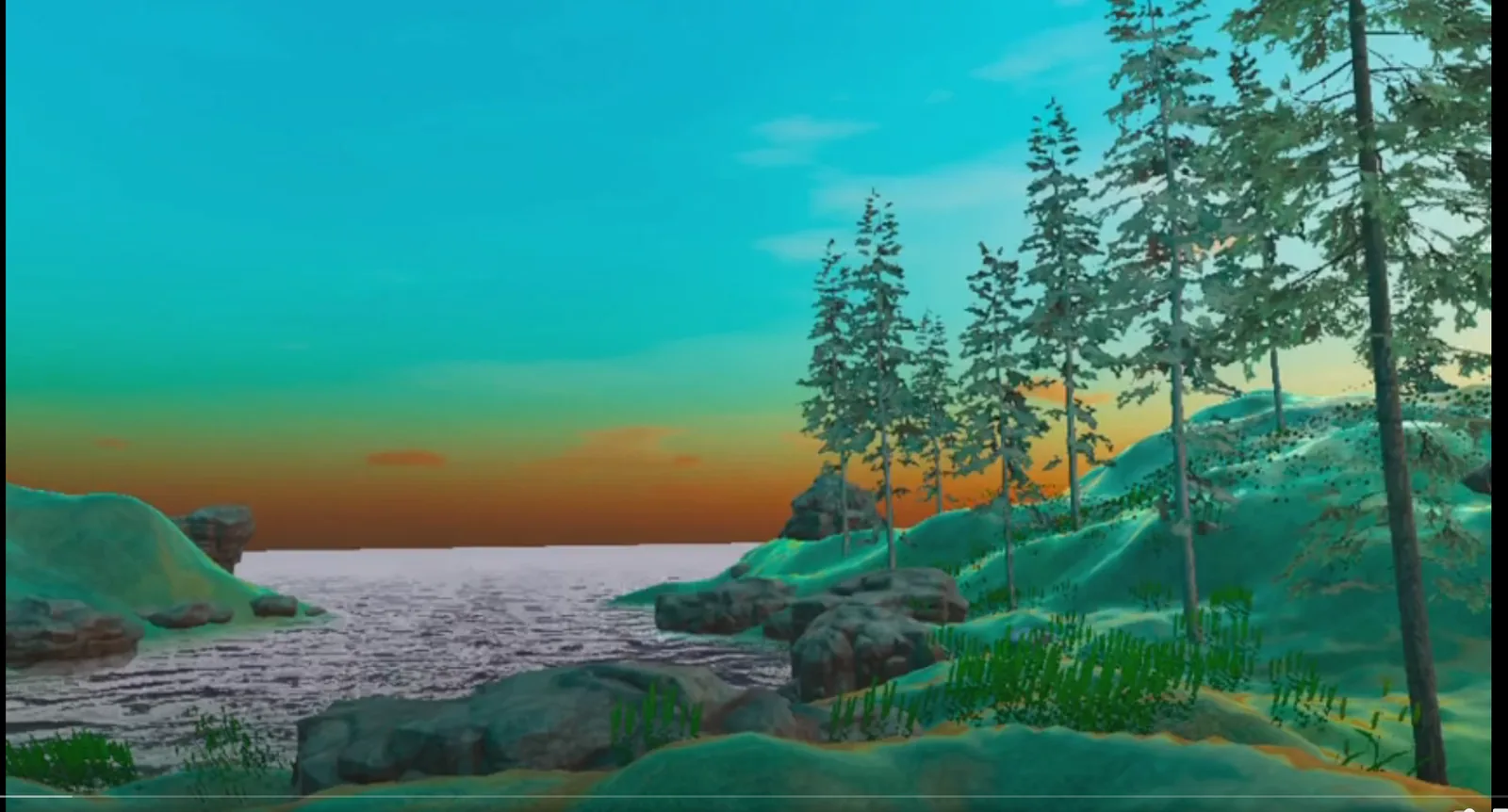
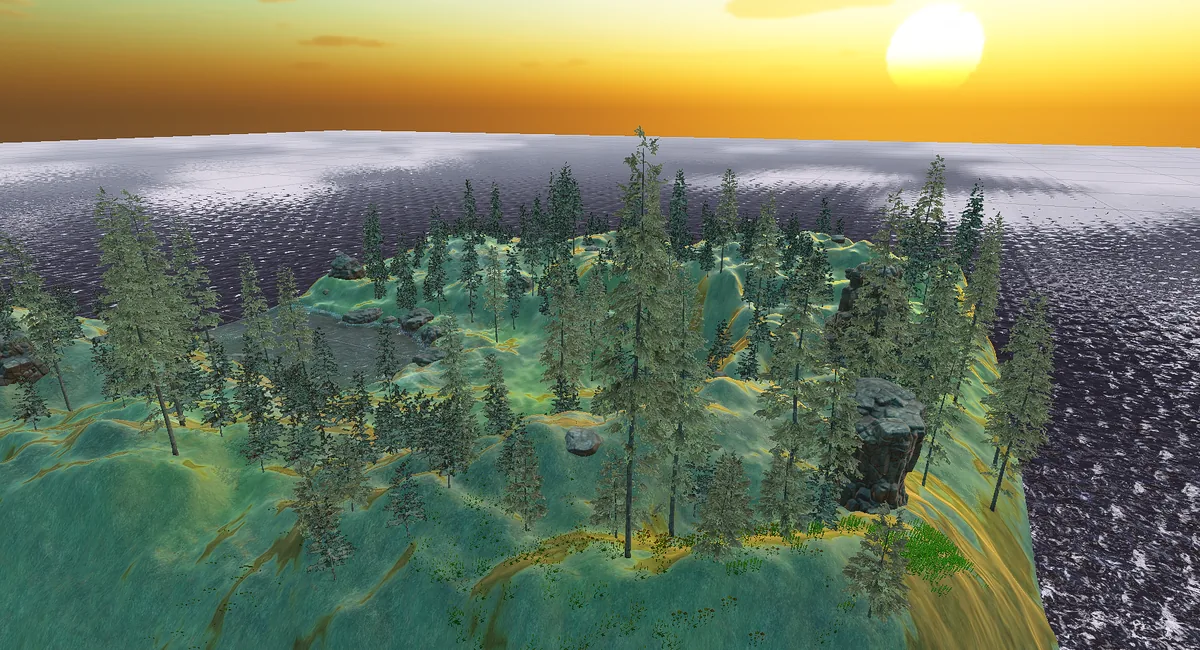
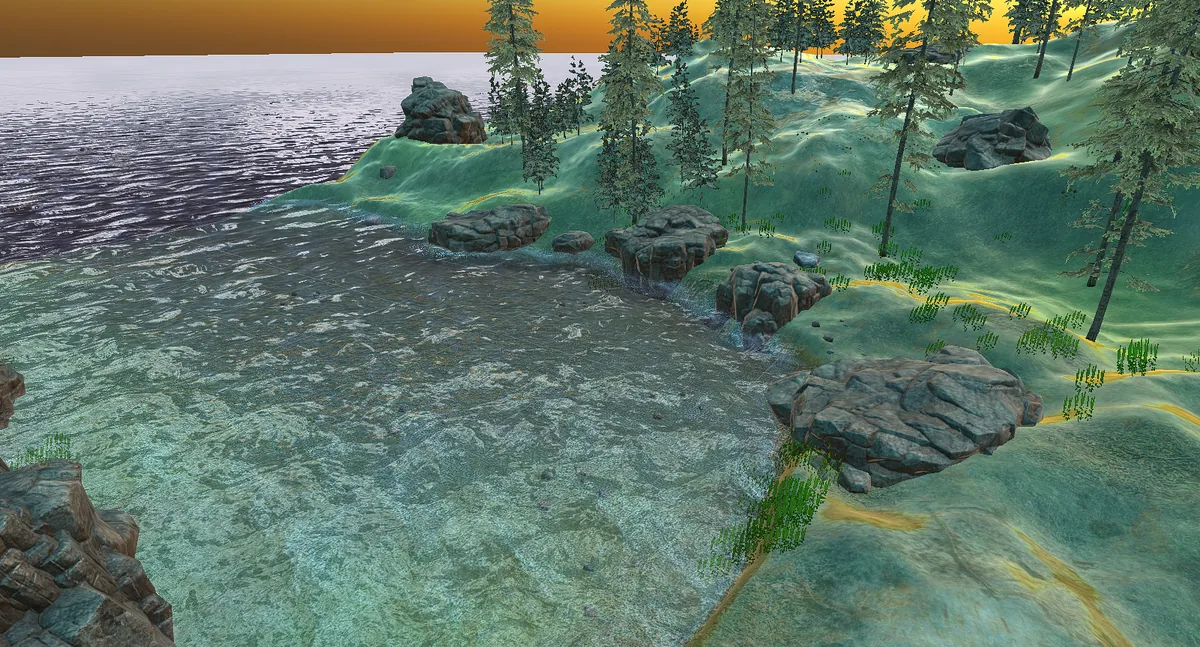
I built a nature-heavy island environment in Unity — hills, water, rocks, and trees — using free Unity Asset Store packages, with a sunrise skybox chosen on purpose: mornings are when people who feel low often struggle most to get moving, so the experience opens with a sunrise rather than a sunset.
The pivot from AR to VR
Partway through building, it became clear the environment I was creating — dense with trees, hills, and water — was too much for Augmented Reality, and my own AR skills weren't strong enough yet to pull it off well. Rather than force a mismatch, I made the call to fully commit to Virtual Reality instead.
I also hit a serious technical setback mid-build: the project suddenly threw over 400 compiler errors with no clear cause, which made it untestable. Rather than chase the bug indefinitely, I rebuilt the project from a clean state — which cost time, but got the prototype back to something I could actually test.
The final prototype
The finished experience is an 8-minute guided meditation on a sunrise island, layered with four looping audio tracks — nature ambience, water, a guided voice, and meditation music — exported and tested as a working build on an Oculus Quest.
What I'd do differently
With more time, a few things were still on the table: letting users move freely to find their own "meditation spot" instead of sitting in a fixed position, offering a choice between guided and unguided sessions with a timer, and a lightweight streak or reward system to encourage people to come back and meditate regularly rather than just once.
I'd also want to properly user-test the guided pacing itself — the breathing rhythm and voice timing were based on research and reference apps, not on watching real people use the build, which is the next thing I'd want to validate before treating this as more than a prototype.